
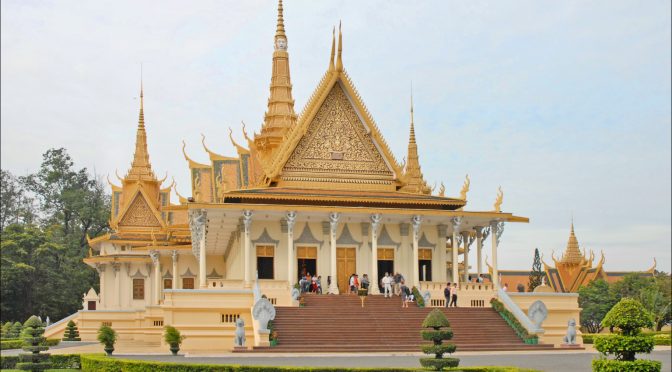
In the heart of Phnom Penh, where busy streets, riverside cafés and the everyday rhythm of the Cambodian capital meet, stands a remarkable landmark that seems to belong to another world. Behind its elegant white walls and golden rooftops, the Royal Palace offers a glimpse into Cambodia’s royal heritage, architectural traditions and enduring cultural identity.
More than a beautiful attraction, it is a place where history, religion and the monarchy come together. For visitors hoping to understand Phnom Penh, this is one of the most meaningful places to begin.
A Palace at the Heart of Cambodia
The Royal Palace was established in 1866, during the reign of King Norodom, when Phnom Penh became Cambodia’s capital. Its location, close to the meeting point of the Mekong and Tonlé Sap rivers, was chosen with both practical and symbolic significance.
Over the decades, the palace complex has undergone various changes and restorations, reflecting different periods of Cambodia’s history. Today, it remains the official residence of the Cambodian King and an important centre of royal ceremonies.
Although parts of the complex are closed to the public, the areas open to visitors reveal an impressive collection of buildings, courtyards and carefully maintained gardens. The atmosphere is noticeably different from the busy streets outside. Here, everything feels quieter and more deliberate.
Architecture That Reflects Cambodia’s Royal Traditions
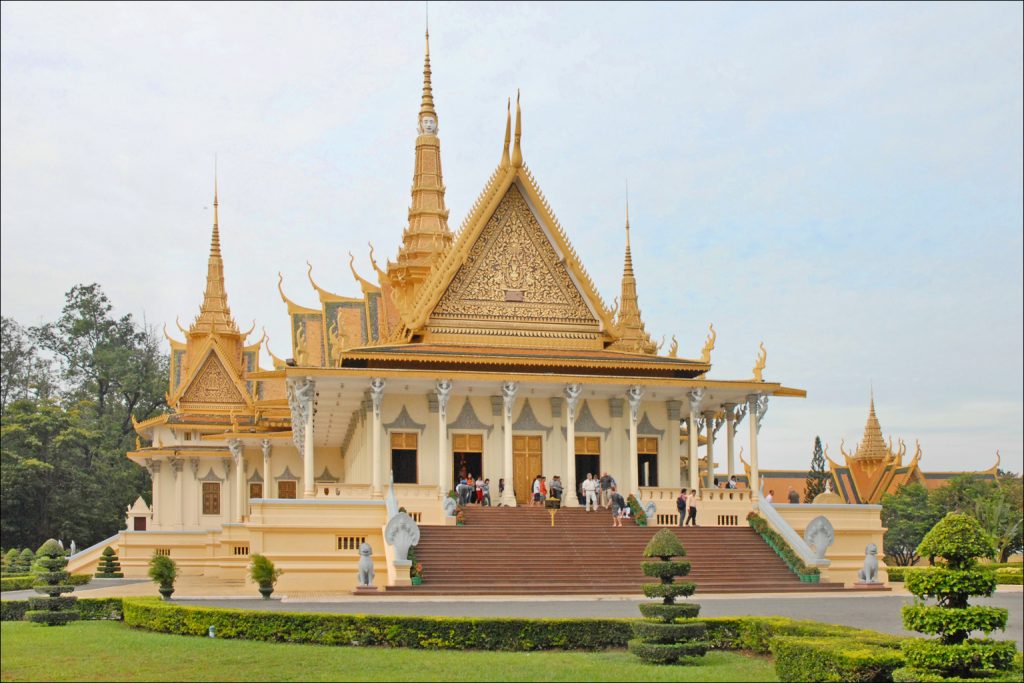
The first thing that catches the eye is the palace’s distinctive architecture. Golden rooflines rise above intricately decorated buildings, while traditional Khmer design elements appear in the columns, gables and ornamental details.
The architecture combines traditional Cambodian influences with elements introduced during later periods. Rather than following one uniform style, the complex brings together different buildings, each with its own character and purpose.
Take time to look closely at the roof decorations and carved details. The layered roofs, elegant spires and elaborate ornamentation are not simply decorative features. They reflect a long architectural tradition in which religious symbolism and royal authority are closely connected.
The palace is particularly striking in the morning, when sunlight falls across its golden surfaces and the surrounding gardens are still relatively peaceful.
The Silver Pagoda: Where Royalty Meets Buddhism
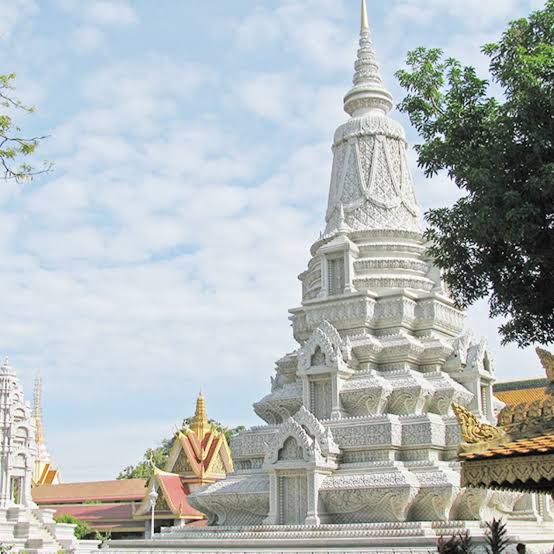
One of the most remarkable places within the palace grounds is the Silver Pagoda, also known as Wat Preah Keo Morokat, or the Temple of the Emerald Buddha.
Unlike an ordinary temple, the Silver Pagoda stands within the Royal Palace complex and serves as an important religious and ceremonial site. Its name comes from the more than 5,000 silver tiles covering its floor. Visitors can only appreciate some of this remarkable craftsmanship from the accessible areas.
Inside, the temple houses valuable Buddha images, including the Emerald Buddha and a life-sized gold Buddha decorated with thousands of diamonds.
Beyond its precious materials, the Silver Pagoda represents the close relationship between Buddhism and Cambodia’s monarchy. Religion has long played an important role in Cambodian society, and this temple remains a powerful expression of that connection.
Even if you have visited many temples across Southeast Asia, the Silver Pagoda offers a different perspective. Its setting within the royal grounds gives it a distinctive sense of history and significance.
A Living Part of Cambodia’s History
What makes the Royal Palace particularly interesting is that it is not simply a monument preserved for tourists. It continues to function as a royal residence and ceremonial centre.
This gives the complex a different character from many historical attractions.
The palace has also witnessed periods of profound change in Cambodian history, from the nineteenth-century establishment of Phnom Penh.
Its continued presence is a reminder of the importance of cultural continuity in a country whose history has been marked by both remarkable achievements and deep hardship.
Visiting the Royal Palace: What to Know
Allow around 1.5 to 2 hours to explore the Royal Palace and Silver Pagoda at a comfortable pace. This gives you enough time to appreciate the architecture, walk through the gardens and learn about the buildings without rushing.
Dress respectfully when visiting. Shoulders and knees should be covered, as the complex is an important royal and religious site. Photography restrictions apply in certain areas, particularly inside the Silver Pagoda, so follow the instructions displayed by staff.
It is worth checking the official opening schedule before visiting, as the palace may close temporarily for royal ceremonies or official functions. Arriving earlier in the day is generally a sensible choice, particularly during Cambodia’s warmer months.
The Royal Palace is centrally located, making it easy to combine with other nearby attractions, including the National Museum of Cambodia and the riverside area.
Beyond the Palace Walls
After exploring the palace, take a moment to walk through the surrounding streets. Phnom Penh is a city of contrasts, where elegant colonial-era buildings stand alongside modern developments, traditional markets and neighbourhoods shaped by everyday Cambodian life.
The nearby riverside offers a different atmosphere, with locals gathering along the promenade, cafés overlooking the water and boats moving steadily along the Tonlé Sap and Mekong rivers.
This contrast is part of what makes Phnom Penh worth exploring. Its royal heritage is only one part of the city’s identity. To understand the capital more fully, you need to experience its streets, food, religious traditions and the stories of the people who call it home.
If you are planning a visit, this Phnom Penh travel guide offers more ideas for exploring the Cambodian capital, from historical landmarks and cultural attractions to local food and places worth discovering beyond the usual sightseeing route.
A Royal Landmark Worth Understanding
The Royal Palace is undoubtedly one of Phnom Penh’s most beautiful landmarks, but its significance goes far beyond its golden roofs and impressive architecture.
It represents a continuing connection between Cambodia’s monarchy, Buddhist traditions and national identity. Every building, courtyard and religious detail offers another glimpse into the country’s cultural heritage.
You do not need to be particularly interested in royal history to appreciate the place. Simply walking through its grounds, observing the craftsmanship and understanding its role in Cambodian life can make the visit worthwhile.
In a city that carries so many layers of history, the Royal Palace offers an opportunity to pause and look at Cambodia from a different perspective — one shaped not only by its past, but also by the traditions that continue to define it today.